What Are Some Toys Fish Like?
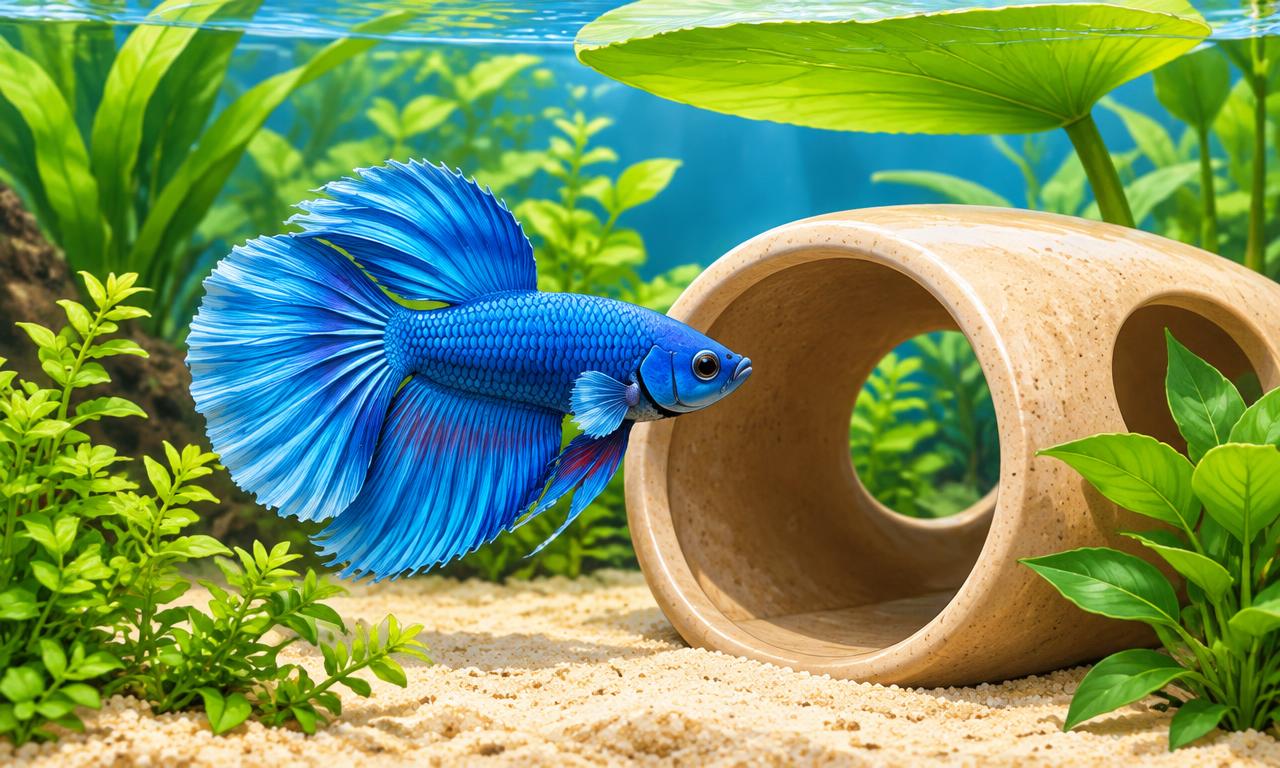
Fish can be surprisingly playful and curious! Although they do not play with toys in exactly the same way that dogs, cats, or children do, many fish enjoy exploring objects, swimming through openings, investigating new decorations, and interacting with things in their environment.
Some fish are naturally more curious than others. Bettas, goldfish, cichlids, and many small tropical fish can show interesting behaviours when their aquariums contain suitable objects to explore.
In fishkeeping, toys are often called enrichment objects. Enrichment means providing things that encourage an animal to explore, investigate, move around, and use its natural behaviours. A well-designed aquarium can provide plenty of entertainment without making the fish feel crowded or stressed.
1. Floating Ping-Pong Balls
Some fish enjoy investigating lightweight objects that float on the surface of the water. A plain, clean, aquarium-safe floating ball may attract a curious fish that likes to push or investigate moving objects.
Bettas, for example, sometimes investigate objects floating near the surface. Some fish may swim underneath them, follow them, or nudge them.
However, ordinary table-tennis balls are not automatically aquarium-safe. They should not be used if they have paint, coatings, damage, or materials that could release chemicals. Only use an object that is confirmed safe for aquarium use and too large to be swallowed.
2. Floating Plants
Floating plants can provide fish with an interesting environment to explore.
Plants such as frogbit, salvinia, and other suitable aquatic plants create little hiding places beneath their leaves and roots. Small fish may swim between the dangling roots, while others enjoy resting underneath the floating leaves.
Floating plants can also make fish feel more secure because they provide shade and cover. Some fish naturally prefer areas with vegetation rather than swimming in completely open water.
Live plants are not toys in the traditional sense, but they provide natural enrichment and can make an aquarium much more interesting.
3. Aquarium Tunnels
Many fish enjoy swimming through tunnels and openings.
Aquarium tunnels can be made from aquarium-safe ceramic, smooth stone, or other materials designed for underwater use. They give fish places to explore, hide, and swim through.
Some fish enjoy passing through the same opening repeatedly. Others use tunnels as places to rest or escape from tankmates.
Tunnels are especially useful for fish that naturally live among rocks, roots, and underwater caves.
The openings must be large enough for the fish to pass through comfortably. A tunnel should never have sharp edges or spaces where a fish could become trapped.
4. Aquarium Caves and Hideouts
Caves are among the most useful aquarium decorations because they provide both entertainment and security.
Fish may swim inside them, investigate the entrances, rest in sheltered areas, or use them as places to retreat when they feel frightened.
Some species are naturally cave-dwelling. Certain catfish, loaches, and cichlids spend considerable time exploring sheltered spaces.
A cave should be designed for aquarium use and should not be so small that a fish can become stuck inside. It should also be stable enough that it cannot collapse or fall over.
5. Aquarium Hoops
Some fish can be encouraged to swim through hoops.
A hoop provides an opening that a fish can investigate and pass through. With patient training and positive reinforcement, certain curious fish can even learn to swim through a hoop when encouraged.
The hoop must be made from aquarium-safe material, with smooth edges and an opening large enough for the fish.
It should never be used to chase or frighten a fish. The fish should always be free to swim away.
6. Marimo Moss Balls
Marimo moss balls are round, green algae structures that are popular in some aquariums.
They have an interesting appearance and provide something different for fish to investigate. Some fish swim around them, while others may gently investigate their surface.
They are not really toys, but they can add texture and variety to an aquarium.
Marimo should only be purchased from reputable sources. Aquatic plants and algae can sometimes carry unwanted organisms or pests, so new materials should be checked carefully before being introduced.
7. Aquarium Driftwood
Driftwood creates an interesting underwater landscape.
Fish can swim around it, explore the spaces underneath it, and hide among its branches. Some species also graze on the microorganisms that grow naturally on suitable driftwood.
Driftwood is particularly useful for fish that enjoy environments with roots, branches, and submerged vegetation.
Only use driftwood that has been properly prepared for aquarium use. Wood collected outdoors may contain pollutants, chemicals, parasites, or other unwanted materials.
8. Aquarium Mirrors
Mirrors are sometimes used briefly as enrichment for certain fish, particularly male bettas.
When a betta sees its reflection, it may mistake it for another betta and display its fins. This behaviour is called flaring.
Flaring is a natural display that makes the fish appear larger and more impressive. However, a mirror should not be left in the aquarium permanently.
Seeing what appears to be another fish can cause stress, especially if the betta repeatedly tries to defend its territory. If a mirror is used at all, it should only be for a very short, supervised period, and it should be removed if the fish becomes distressed.
Mirrors are not suitable for every species.
9. Aquarium Bubbles
Some fish investigate streams of bubbles produced by aquarium air stones.
An air stone releases tiny bubbles into the water, creating a column of rising bubbles. Fish may swim near the bubbles, investigate the movement, or explore the current they create.
Air stones are not toys exactly, but they can make the aquarium environment more interesting.
They also help circulate water and can contribute to oxygen exchange at the water's surface. However, not every fish enjoys strong currents, so the air flow should be appropriate for the species.
10. Aquarium Plants to Swim Through
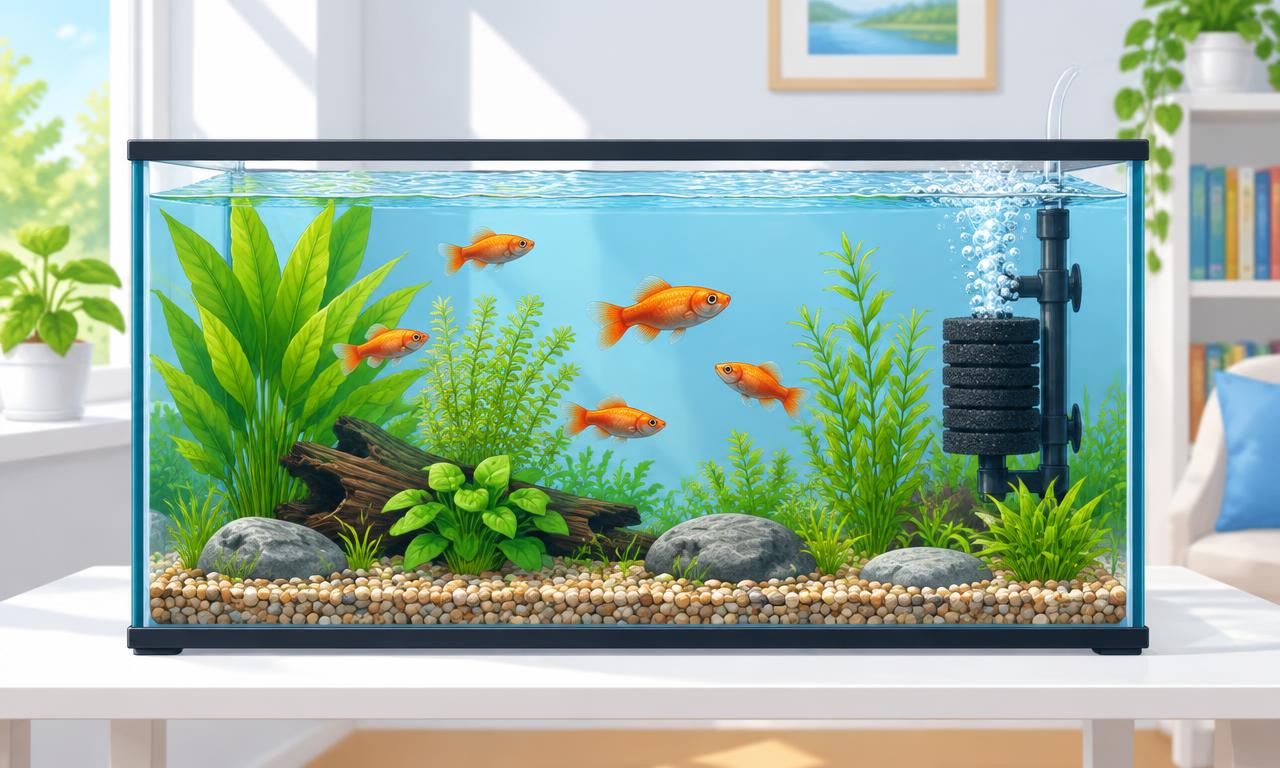
A planted aquarium can be like a playground for fish.
Plants create pathways, sheltered areas, and places to investigate. Fish can swim between stems, weave through leaves, and explore different levels of the aquarium.
Some fish prefer broad leaves, while others enjoy fine, bushy plants that provide lots of small hiding places.
Plants also help create a more natural-looking environment. The important thing is to choose aquatic plants that are safe for the fish and suitable for the aquarium's lighting and water conditions.
11. Smooth Aquarium Stones
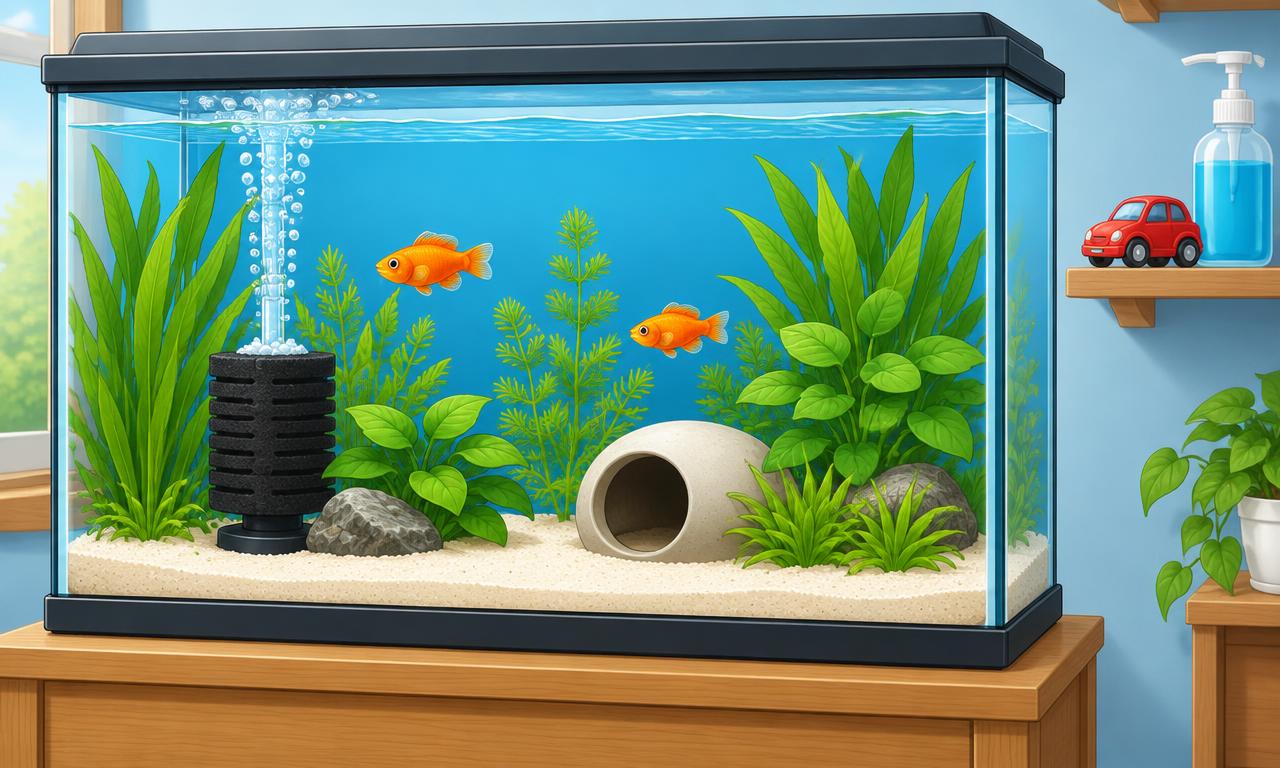
Smooth stones can create interesting spaces for fish to explore.
Fish may swim around the stones, investigate the gaps between them, or use them as sheltered resting places.
Some species naturally search among rocks for food. Others enjoy swimming through small spaces between stones.
Stones must be aquarium-safe, clean, and stable. Avoid sharp rocks, painted stones, and stones that may release unwanted minerals into the water.
12. Feeding Toys and Puzzle Feeders
Some aquarium accessories make feeding more interesting.
A floating feeding ring keeps floating food in one general area instead of allowing it to spread across the entire aquarium. It can also help the owner observe how much food the fish actually eat.
Certain fish can also be given appropriate feeding puzzles or specially designed devices that release food gradually.
These activities encourage fish to investigate their surroundings while searching for food. However, any feeding toy must be designed for aquarium use and must not trap the fish or interfere with normal swimming.
Can You Teach a Fish to Play?
Some fish can learn simple behaviours through repetition and positive reinforcement.
For example, a fish might learn to:
- Swim through a hoop.
- Follow a target.
- Swim toward a particular object.
- Approach a feeding location when signalled.
- Investigate a floating object.
Training works best when the fish is comfortable, healthy, and interested in participating.
A small food reward can be used to encourage a behaviour, but it should come from the fish's normal daily food allowance. Giving extra food every time the fish performs a trick can lead to overfeeding.
Training sessions should be short. A fish should never be chased, grabbed, frightened, or forced to perform.
Not every fish will enjoy training, and that is perfectly normal.
Toys You Should Never Put in an Aquarium
Although it is tempting to use ordinary children's toys, many are not designed to remain underwater.
Never assume that an object is safe just because it is made of plastic.
Avoid:
- Painted toys that may release chemicals.
- Metal objects that can rust or release harmful substances.
- Rubber bands that could trap or injure fish.
- Objects with sharp edges.
- Small beads or pieces that fish could swallow.
- Toys with batteries or electrical components.
- Objects held together with ordinary glue.
- Anything with openings in which a fish could become trapped.
Only use decorations and enrichment objects that are specifically designed for aquariums or confirmed to be safe for aquatic animals.
Do Fish Actually Need Toys?
Fish do not necessarily need toys in the way that a dog needs chew toys or a child needs playthings. What they need is an environment that allows them to carry out natural behaviours.
Different fish enjoy different activities. Some like swimming through open spaces, others prefer exploring caves, and some spend much of their time searching for food among plants and decorations.
A good aquarium should provide:
- Places to explore.
- Places to hide.
- Room to swim.
- Suitable plants and decorations.
- Opportunities to search for food.
- A safe environment without sharp or dangerous objects.
The best fish toys are often the things that make an aquarium feel more like a natural underwater habitat. A fish that can explore, hide, swim, and investigate its surroundings has a much more interesting home than one living in an empty tank.