How Often Should You Change the Water in a Fish Tank?
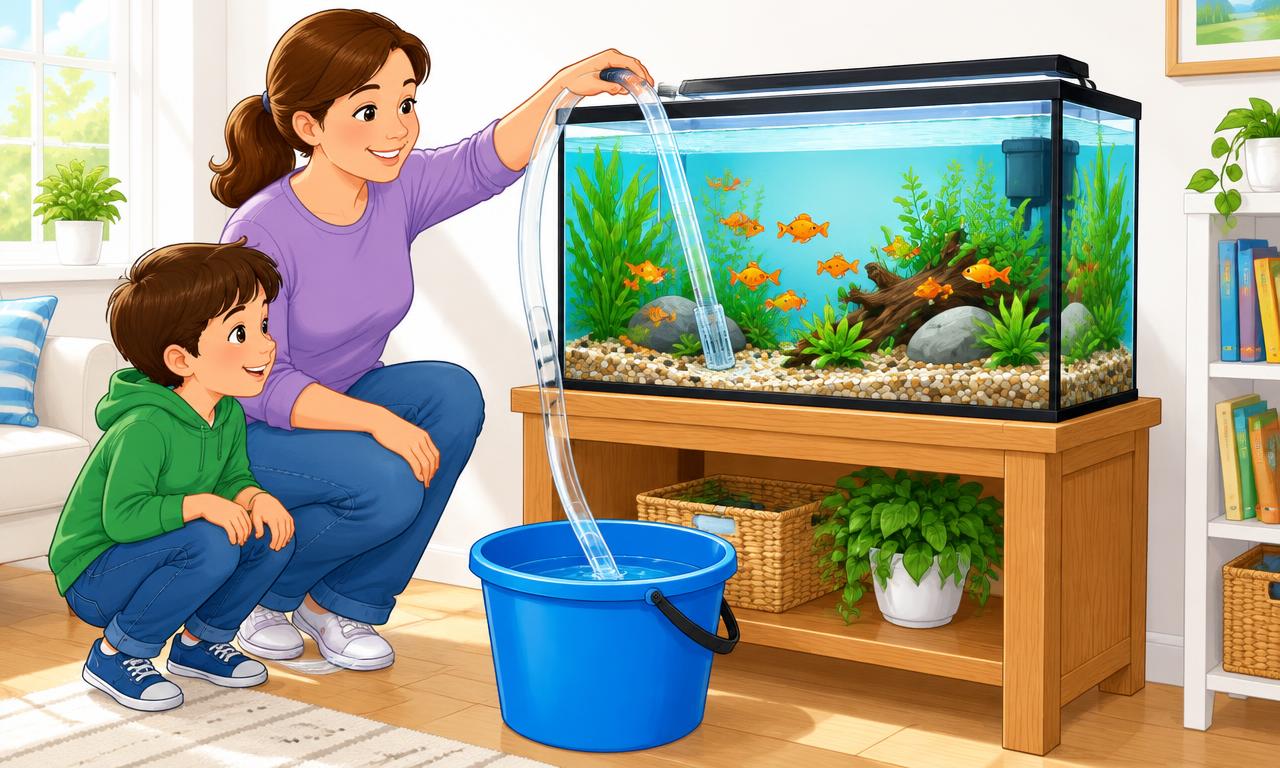
Changing the water in a fish tank is one of the most important jobs involved in keeping pet fish healthy. Although a filter helps remove debris and supports the natural processes that break down fish waste, it cannot keep aquarium water clean forever. Over time, dissolved waste products accumulate, minerals and other substances can change in concentration, and the water may become less suitable for the fish living in it. Regular water changes help prevent these problems and maintain a healthy environment.
For many established freshwater aquariums, a partial water change of approximately 10–25% once a week is a reasonable starting point. However, this is not a universal rule. Some aquariums need more frequent or larger water changes, while others may require a different routine depending on their inhabitants, filtration system, and water-test results. The goal is to remove accumulated waste while keeping the aquarium's water conditions stable.
Understanding how often to change the water, how much to replace, and how to prepare the new water will help you care for your fish properly.
1. Why Do You Need to Change Fish Tank Water?
Fish live, breathe, eat, and produce waste in the same water. Unlike people, who can leave a room when it becomes unpleasant, fish cannot simply move away from the water surrounding them. They depend on their owners to maintain suitable conditions.
Every time a fish eats, its body processes the food and produces waste. Some waste is released through the gills, while other waste leaves the body in a different form. Uneaten food, dead plant material, and other organic matter also contribute to the waste found in an aquarium.
A filter helps manage this problem, but filtration does not remove every unwanted substance. Some waste products remain dissolved in the water, even when the aquarium looks clean.
One example is nitrate, which forms during the nitrogen cycle. Beneficial microorganisms in the aquarium help convert ammonia into nitrite and then nitrate. Ammonia and nitrite are highly toxic to fish, while nitrate is generally less toxic. However, nitrate can still become harmful when its concentration becomes too high.
Partial water changes help remove accumulated nitrate and other dissolved substances. They also help maintain suitable water chemistry.
Water changes are therefore not simply about making the aquarium look attractive. They are an essential part of maintaining the environment in which fish live.
2. How Often Should You Change the Water?
For a typical, established freshwater aquarium, changing approximately 10–25% of the water each week is a useful starting point. The appropriate schedule depends on the aquarium and should be adjusted according to water testing and the needs of the fish.
A lightly stocked aquarium with effective filtration may require less frequent intervention than an aquarium containing many fish or animals that produce large amounts of waste.
Several factors influence how often water changes are needed:
The number of fish: An aquarium containing many fish generally produces more waste than one containing only a few. If the filtration system cannot process the waste quickly enough, water quality can deteriorate.
The size of the fish: Larger fish often produce more waste than smaller fish. Some species also grow much larger than they appear when purchased.
The size of the aquarium: A smaller volume of water can experience rapid changes in water quality. This means small aquariums may require particularly careful monitoring.
The amount of food provided: Uneaten food decomposes and contributes to waste. Overfeeding can therefore increase the need for maintenance.
The effectiveness of the filter: A properly maintained filter supports the processing of fish waste. However, even an effective filter does not eliminate the need for water changes.
The aquarium's plants and substrate: Live plants can absorb some nitrate and other nutrients, while the substrate and other surfaces influence the aquarium's biological processes. Their effects vary according to the aquarium's design and maintenance.
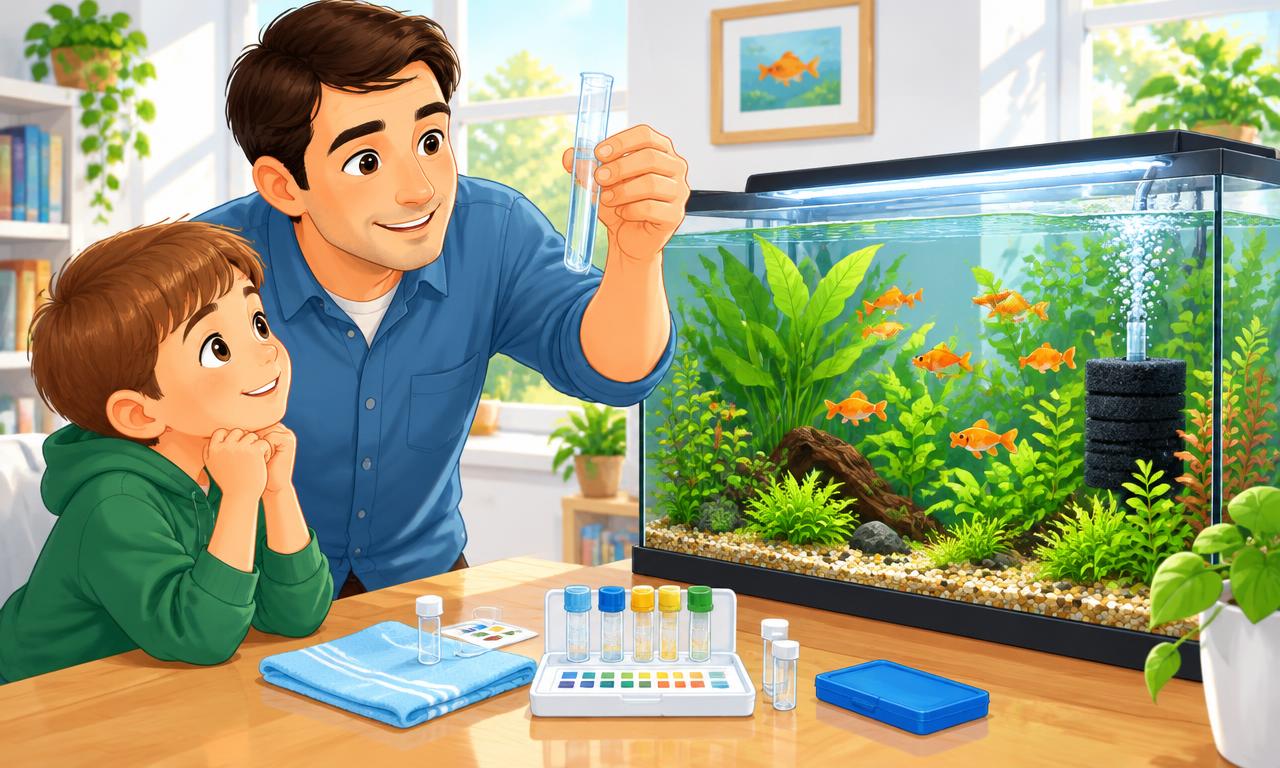
The results of water testing: Testing provides important information about the aquarium's condition. Rising nitrate levels may indicate that water changes need to be more frequent or that other aspects of aquarium care should be adjusted.
Rather than following a rigid schedule without considering these factors, aquarium owners should use a regular maintenance routine and adjust it when necessary.
3. What Is a Partial Water Change?
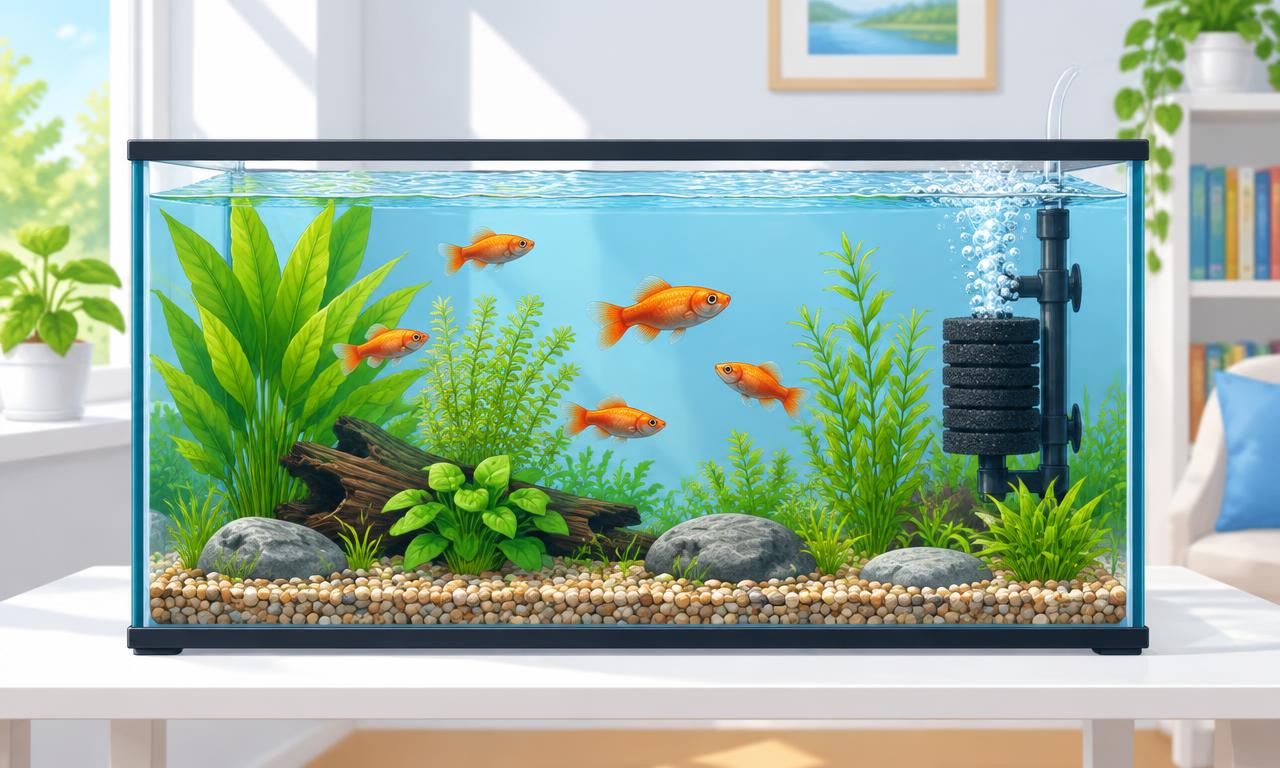
A partial water change means removing some of the water from an aquarium and replacing it with fresh, appropriately prepared water.
For example, imagine that a fish tank holds 40 litres of water. If you remove 20% of the water, you remove approximately 8 litres. You then replace those 8 litres with suitable fresh water.
The fish generally remain in the aquarium during an ordinary partial water change. They do not need to be caught and transferred to another container simply because some of the water is being replaced.
Partial water changes are useful because they remove a portion of the dissolved waste without completely replacing the aquarium's environment.
They also help maintain stability. Sudden changes in temperature, pH, mineral content, or other water conditions can stress fish. Replacing only part of the water, using appropriately prepared replacement water, helps reduce the risk of drastic changes.
The amount of water to change depends on the aquarium's needs. A routine weekly change might be relatively small, while an aquarium with an urgent water-quality problem may require a different response.
It is important to remember that partial water changes do not remove every problem automatically. If the aquarium contains dangerous levels of ammonia or nitrite, the owner must respond promptly and may need to perform appropriate water changes while addressing the underlying cause.
4. Should You Ever Change All the Water in a Fish Tank?
In an ordinary, functioning aquarium, replacing all the water at once is generally unnecessary and can create problems.
An established aquarium contains beneficial microorganisms on the filter media, gravel, decorations, plants, and other surfaces. These microorganisms help process fish waste and maintain the nitrogen cycle.
Replacing all the water does not automatically remove all these microorganisms because many live on surfaces rather than floating freely in the water. Nevertheless, a complete water change can cause serious problems if the replacement water differs greatly in temperature or chemistry, or if the process also involves excessive cleaning of the filter and other surfaces.
For example, an owner might empty the aquarium, scrub every decoration, wash the filter thoroughly, and then refill the tank with untreated tap water. This combination of actions can damage the biological filtration system and expose the fish to harmful chemicals or sudden environmental changes.
A complete water change may sometimes be necessary in unusual circumstances, but it should not be the normal maintenance routine for a healthy aquarium.
Partial water changes are generally a safer and more practical approach because they remove waste while helping preserve stable conditions.
If an aquarium has a serious contamination problem, the appropriate response depends on what entered the water and how it affects the fish. Simply emptying and refilling the tank may not be sufficient, and expert advice may be needed.
5. How Do You Change the Water in a Fish Tank?
Changing aquarium water is a straightforward task when it is done carefully. The exact procedure depends on the tank's size, equipment, and inhabitants, but the general process is similar for many freshwater aquariums.
Step 1: Prepare the Replacement Water
Before removing the old water, prepare the water that will replace it.
If you use municipal tap water, it may contain chlorine or chloramine. These chemicals are used to disinfect drinking water, but they can harm fish and beneficial aquarium microorganisms.
A suitable aquarium water conditioner should be used according to its instructions to make the replacement water safe.
The replacement water should also be close to the aquarium's temperature. Adding much colder or warmer water can cause a sudden temperature change that stresses fish.
Water chemistry matters, too. For species that require particular mineral levels or pH conditions, replacement water must be suitable for their needs.
Step 2: Turn Off Equipment When Necessary
Some aquarium equipment may need to be switched off during a water change, depending on its design and the amount of water being removed.
For example, certain filters or heaters may be damaged if they operate without sufficient water. Follow the manufacturer's instructions, and unplug equipment before handling it when necessary for safety.
Keep electrical connections away from water, and never handle electrical equipment with wet hands.
Not every filter needs to be switched off during every water change. The correct procedure depends on the equipment.
Step 3: Remove Some of the Old Water
Use a clean aquarium siphon, suitable hose, or dedicated container to remove the desired amount of water.
A siphon is especially useful because it can remove water while collecting debris from the gravel or substrate.
If you are cleaning the substrate, move the siphon carefully to remove accumulated waste without unnecessarily disturbing the entire aquarium.
Avoid using containers that have been exposed to soap, detergent, household cleaners, or other chemicals. Residues can contaminate the aquarium.
Step 4: Add the Prepared Water
Slowly add the replacement water to the aquarium.
Pouring it in gently helps avoid disturbing the substrate, uprooting plants, or startling the fish. The water should be appropriately conditioned and close to the aquarium's temperature.
If the aquarium contains delicate species, sensitive plants, or animals that require stable water chemistry, take extra care to ensure that the replacement water is suitable.
Step 5: Check the Aquarium
After the water change, check that the water level is appropriate and that the filter and other necessary equipment are operating correctly.
Observe the fish for unusual behaviour. They should not be left gasping at the surface, swimming erratically, or showing other signs of distress.
If the aquarium has a known water-quality problem, test the water to determine whether further action is necessary.
A successful water change should improve the aquarium's conditions without causing a sudden, unnecessary disturbance.
6. What Is a Water Conditioner, and Why Is It Important?
A water conditioner is a product used to prepare water