How Often Do You Have to Change or Replace a Fish Tank Filter?
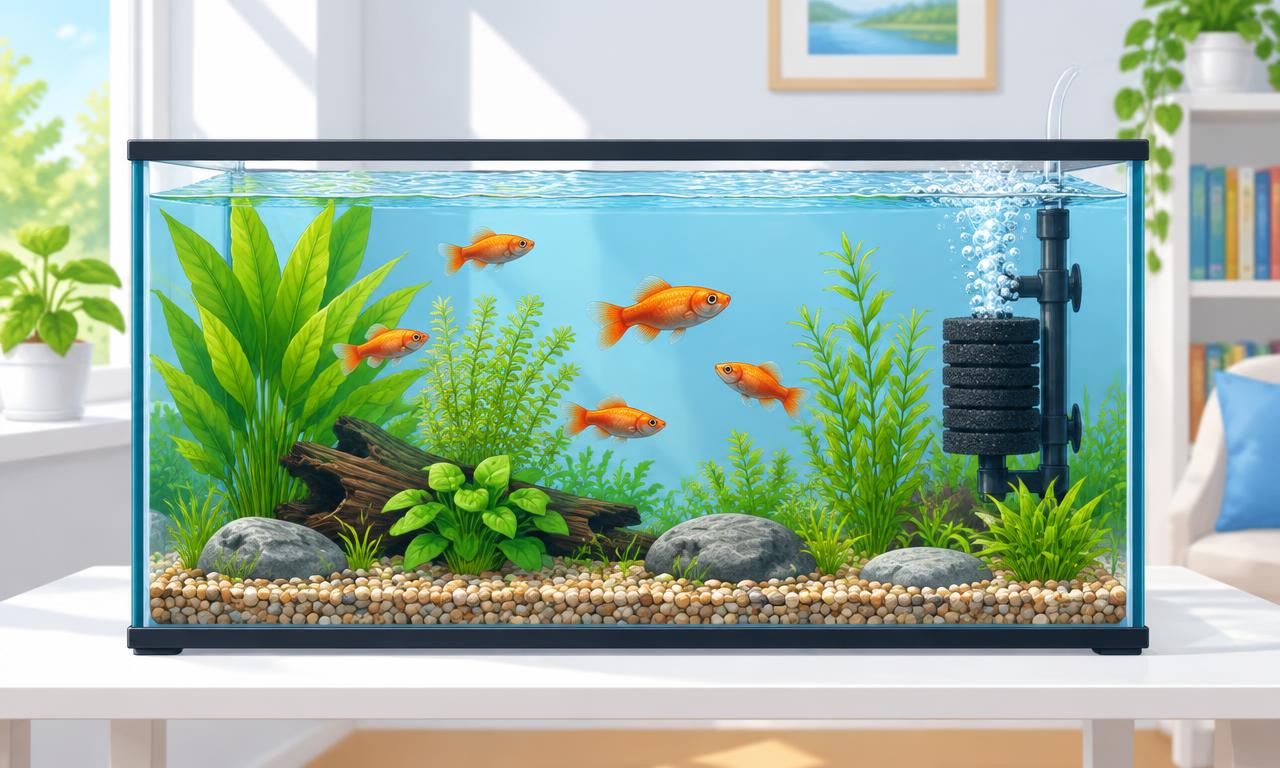
A fish tank filter is an important part of keeping aquarium water healthy, but does it need to be replaced regularly? The answer depends on what part of the filter you mean. The filter itself usually does not need to be replaced on a regular schedule. Instead, certain parts inside the filter may need cleaning or replacing as they wear out. Understanding the difference can help aquarium owners save money, avoid unnecessary work, and protect the health of their fish.
Many aquarium filters contain several different materials, including sponges, filter pads, cartridges, and biological filter media. Each material has a different purpose and lifespan. Some can be rinsed and reused many times, while others are designed to be replaced periodically. The filter's motor or pump may last for years if it is properly maintained, although individual components can eventually wear out or fail.
One of the most important things to understand is that an aquarium filter is not simply a disposable object that becomes useless when it gets dirty. A mature filter contains beneficial microorganisms that help process fish waste. Replacing everything inside the filter at once can remove many of these microorganisms and disrupt the aquarium's biological filtration system. This can cause dangerous substances, particularly ammonia and nitrite, to accumulate in the water.
To understand when a filter needs attention, it helps to look at its individual parts and the jobs they perform.
1. Do You Have to Replace the Entire Filter?
In most cases, no. A complete aquarium filter does not need to be replaced simply because it has been used for several months or because its interior looks dirty.
Many aquarium filters are designed to operate for years. As long as the unit continues to function properly, moves water effectively, and can be maintained according to the manufacturer's instructions, there may be no reason to replace it.
A filter usually consists of a housing, a mechanism that moves water, and one or more types of filter media. The housing holds the components in place, while the pump or another mechanism creates water movement. The filter media perform the actual filtering functions.
Over time, some components may become worn, damaged, or less effective. A motor may fail, a seal may deteriorate, or a plastic component may crack. In these situations, the owner may be able to replace an individual part rather than purchasing an entirely new filter.
However, if the filter is badly damaged, repeatedly malfunctions, leaks, or can no longer provide adequate filtration, replacing the complete unit may be the most sensible option.
The important lesson is that a filter should be replaced because it can no longer do its job safely and effectively, not simply because it has reached an arbitrary age.
2. How Often Should You Replace a Filter Cartridge?
A filter cartridge is a removable component found in many aquarium filters. It often consists of a plastic frame or support containing a pad, sponge-like material, or other filtering material.
Some cartridges are designed primarily for mechanical filtration, which means they catch solid particles such as uneaten food, plant fragments, and other debris. Others contain activated carbon or additional materials intended to provide chemical filtration.
The recommended replacement schedule depends on the particular cartridge and the filter manufacturer's instructions. Some products specify replacement every few weeks, while others can be maintained and reused for longer periods.
However, the instructions on a cartridge package do not always tell the whole story about aquarium biology.
A cartridge that has been operating in an established aquarium may contain beneficial microorganisms. These microorganisms help convert toxic ammonia into nitrite and then nitrate as part of the nitrogen cycle. Removing the cartridge can remove some of the biological filtration capacity that the aquarium depends on.
This does not mean that every cartridge must be kept forever. Rather, it means that owners should understand what their cartridges do before replacing them.
If a cartridge is designed to be rinsed and reused, it can often be cleaned gently when debris accumulates. If it contains disposable chemical media, that material may eventually need replacing according to the manufacturer's instructions.
When a cartridge must be replaced, it is important to avoid unnecessarily removing all the established biological filtration at once. Where the filter design permits, retaining reusable biological media or transitioning gradually to suitable replacement media can help preserve the beneficial microorganisms.
Owners should also monitor water quality during changes to their filtration system, particularly ammonia and nitrite.
3. How Often Should You Replace a Filter Sponge?
Filter sponges are commonly used in internal filters, sponge filters, and other aquarium filtration systems. They contain many small spaces that trap particles while providing surfaces where beneficial microorganisms can grow.
Unlike some disposable cartridges, many aquarium sponges are designed to be cleaned and reused repeatedly.
A sponge does not automatically need replacing when it becomes dirty. In fact, a mature sponge can be extremely valuable because it may contain a large population of microorganisms that help maintain biological filtration.
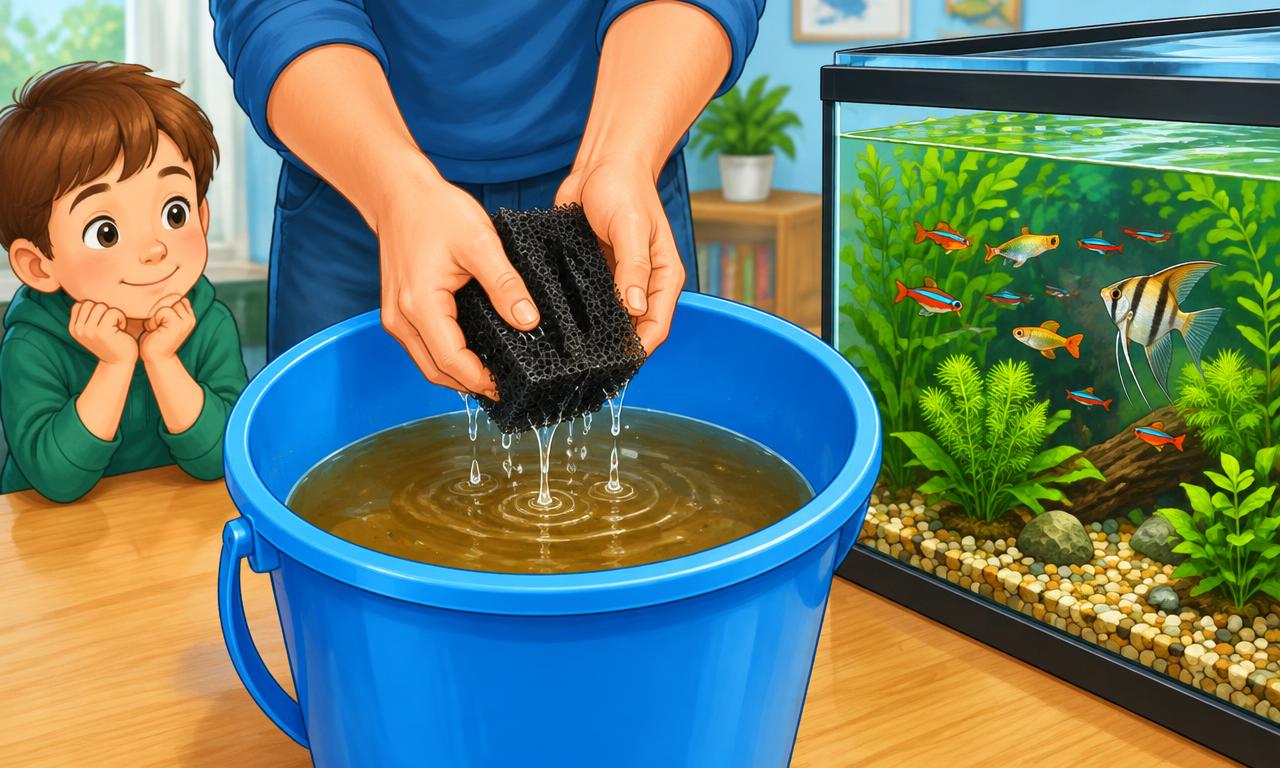
Instead of throwing it away, the owner can often rinse it gently in water removed from the aquarium during a water change. This helps remove trapped debris without exposing the sponge to untreated tap water, which may contain chlorine or chloramine.
The sponge should not be scrubbed aggressively or cleaned so thoroughly that its biological community is unnecessarily damaged.
Eventually, a sponge may become physically worn out. It might begin breaking apart, lose its shape, develop tears, or become too deteriorated to remain securely in its intended position. At that point, replacement may be necessary.
There is no universal replacement interval for all aquarium sponges. Their lifespan depends on the material, the amount of debris they collect, the frequency of cleaning, and the conditions in which they are used.
Some sponges can last for years with suitable care, while others may need replacing sooner.
When replacing a sponge, the owner should consider how much biological filtration it provides. If it is the aquarium's primary biological filter, replacing it all at once may disrupt the nitrogen cycle. Whenever possible, suitable established biological media should be retained, and water quality should be monitored carefully.
4. How Often Should You Replace Activated Carbon?
Activated carbon is a type of chemical filter media used to remove certain dissolved substances from aquarium water.
It has a highly porous structure that provides a large surface area for attracting and holding particular compounds. This process is called adsorption.
Activated carbon is useful for certain purposes, including removing some organic compounds, reducing some unwanted odours, and helping clear discolouration from the water. It may also be used to remove certain medications after a treatment has finished, provided the medication's instructions and the aquarium's treatment requirements permit this.
However, activated carbon does not have an unlimited capacity. As it adsorbs substances, the available capacity gradually becomes used up.
Once the carbon has reached the end of its useful capacity, it may no longer provide the intended chemical filtration. The water may still look clear, so appearance alone cannot tell an owner whether the carbon remains effective.
The replacement interval depends on the product, the aquarium's water conditions, and the substances the carbon is expected to remove. Owners should follow the manufacturer's guidance rather than assuming that every carbon product needs replacing on exactly the same schedule.
It is also important to understand that activated carbon is not essential in every aquarium. Some aquariums operate successfully using mechanical and biological filtration without routinely using carbon.
Replacing activated carbon does not mean that the entire filter needs replacing. The carbon can often be changed independently while the other filter components remain in place.
5. How Often Should You Replace Biological Filter Media?
Biological filter media provide surfaces where beneficial microorganisms establish themselves and help process fish waste.
Examples include porous ceramic rings, specialized porous blocks, and other materials designed to support biological filtration.
These materials are particularly important because they help maintain the nitrogen cycle. Without sufficient biological filtration, ammonia and nitrite can accumulate and threaten the fish.
Biological filter media generally should not be replaced on a routine schedule if they remain in good condition. Many types can continue to work for years.
They may occasionally need gentle cleaning if debris builds up, but cleaning should be performed in a way that preserves as much of the established biological community as reasonably possible.
Eventually, a material may deteriorate, crumble, become physically damaged, or no longer fit securely in the filter. In those circumstances, replacement may be appropriate.
When biological media must be replaced, the owner should avoid removing all established media at once whenever possible. Introducing new media does not instantly recreate the full biological filtration capacity of the old material.
A gradual transition, where the filter design permits it, can help preserve some of the existing biological community while microorganisms establish themselves on the new material.
Water quality should be monitored during and after the change. If ammonia or nitrite begins to rise, prompt corrective action may be necessary to protect the fish.
6. How Often Should You Clean a Filter?
Cleaning a filter is different from replacing it.
Cleaning removes accumulated debris from the filter so that water can continue flowing through it properly. Replacing involves removing a component and installing a new one.
Many filters need occasional cleaning, but the appropriate frequency varies. An aquarium containing large, messy fish may accumulate debris more quickly than one containing a few small fish. The amount of food provided, the design of the filter, and the amount of mechanical filtration also influence how often cleaning is needed.
Rather than relying only on a calendar, owners should watch for signs that maintenance is required.
For example, if the water returning from a filter suddenly becomes much weaker than usual, the intake or filter media may be blocked. A visible accumulation of debris may also indicate that the mechanical media need attention.
The owner should consult the manufacturer's instructions to determine how to clean the particular filter.
Mechanical media can often be rinsed gently in removed aquarium water. Biological media should be handled carefully, since aggressive cleaning may remove or damage beneficial microorganisms.
The filter should also be checked for accumulated debris around its moving parts. Some models require periodic maintenance of the impeller, which is the rotating component that helps move water through the system.
Cleaning should restore proper operation without unnecessarily destroying the biological filtration system.
7. What Happens If You Replace All the Filter Media at Once?
Replacing all the filter media simultaneously can create a serious problem if the old media contain most of the aquarium's beneficial microorganisms.
These microorganisms play a crucial role in converting ammonia into nitrite and then nitrate. If much of their established population is removed, the aquarium may no longer be able to process fish waste quickly enough.
Ammonia and nitrite can then accumulate in the water. This situation can cause stress, damage the fish's gills, interfere with oxygen transport, and potentially lead to death.
The problem may not be immediately obvious. The aquarium can look clean, and the fish may initially appear normal, even while water quality is deteriorating.
This is one reason experienced aquarium keepers pay attention to biological filtration rather than focusing only on how clean the filter looks.
When a component needs replacing, it is often safer to retain suitable established biological media while changing the worn or disposable material. If the filter uses a single cartridge, an owner may be able to add appropriate reusable biological media, depending on the filter's design and the manufacturer's instructions.
The goal is to maintain sufficient biological filtration while carrying out the necessary maintenance.
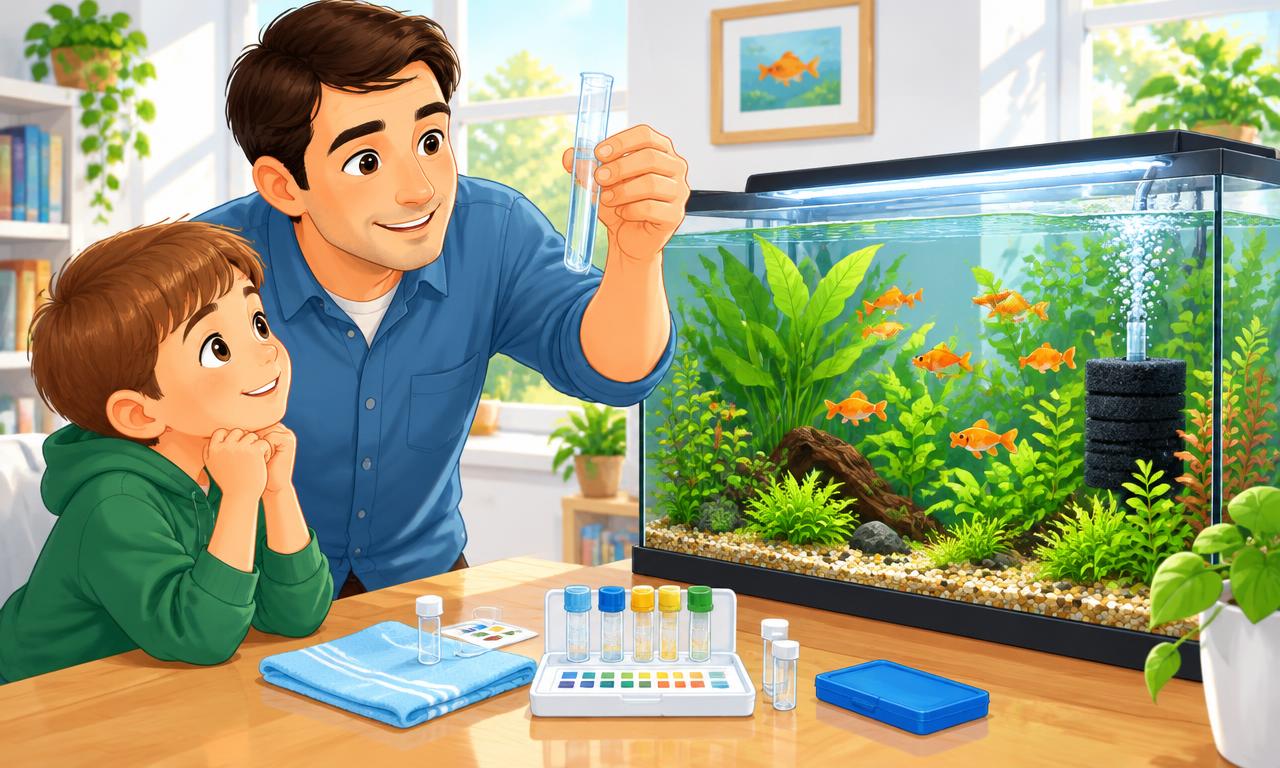
After significant changes to the filter, testing the water for ammonia and nitrite is particularly important. If unsafe levels are detected, appropriate water changes and other corrective measures should be taken promptly.
8. How Do You Know When a Filter Needs Replacing?
There are several signs that a filter or one of its components may need attention.
Reduced water flow: If the filter is moving much less water than usual, debris may be blocking the intake or filter media. Cleaning may solve the problem, but a damaged pump or worn component may also be responsible.
Unusual noises: A filter that begins rattling, grinding, or making unfamiliar noises may have a blocked or damaged impeller, a loose component, or another mechanical problem.
Visible damage: Cracks in the housing, broken fittings, deteriorated seals, or damaged electrical components may make the filter unsafe or unreliable.
Repeated failure: If the filter frequently stops working despite appropriate cleaning and maintenance, a component may be failing.
Persistent leaks: Water escaping from a filter can damage surrounding surfaces and may indicate a problem with a seal, fitting, housing, or other component.
Deteriorated filter media: A sponge that is breaking apart or a pad that can no longer be used effectively may need replacement.
Not every problem requires purchasing a new filter. Sometimes a careful cleaning or replacement of a small component is enough.
However, damaged electrical equipment should not be used, and leaks or other safety problems should be addressed promptly.
The owner should also remember that a filter can appear to work normally while providing insufficient biological filtration. Water testing remains an important part of assessing aquarium health.
9. Does a Bigger Fish Tank Need Its Filter Replaced More Often?
Not necessarily. The size of the aquarium does not, by itself, determine how often a filter must be replaced.
What matters is the combination of the filter's design, the amount of waste produced, the type and number of fish, and the condition of the filtration materials.
A larger aquarium containing several large fish may produce considerable waste and require frequent mechanical-filter cleaning. A smaller aquarium containing only a few small fish may accumulate debris more slowly.
However, a small aquarium can also develop water-quality problems quickly because it contains less water to dilute waste and may be less forgiving of mistakes.
A filter that is too small for its aquarium may struggle to provide adequate circulation and filtration. In that situation, the solution may be to improve or upgrade the filtration system rather than repeatedly replacing the existing media.
Owners should select a filter that is appropriate for the aquarium and its inhabitants. They should also consider the adult size of the fish, since some species grow substantially after purchase.
A properly selected filter, combined with suitable maintenance, can often continue serving an aquarium for many years.
10. Can You Use a Fish Tank Without a Filter?
Some aquariums are deliberately designed to operate without a conventional mechanical filter. These systems rely on careful stocking, suitable plants or other biological processes, appropriate maintenance, and close monitoring of water quality.
However, keeping fish safely without a filter requires a sound understanding of the species' needs and the aquarium's waste-processing capacity. It should not be assumed that an unfiltered tank is suitable simply because it contains plants or looks clean.
A filter provides a convenient way to circulate water and support biological filtration. For many common home aquariums, using an appropriately sized filter is a straightforward way to help maintain stable conditions.
Even in an aquarium without a conventional filter, fish waste must still be managed. Ammonia and nitrite must not be allowed to accumulate to dangerous levels, and appropriate water changes and monitoring remain essential.
For beginners, a properly prepared aquarium with suitable filtration is generally a sensible starting point.
11. A Simple Guide to Filter Maintenance
Although every filter is different, the following guide summarizes the main principles of filter care.
| Filter component | What to do | When to do it |
|---|---|---|
| Complete filter unit | Inspect its operation and condition | Regularly |
| Mechanical sponge or pad | Clean or rinse if debris restricts flow | As needed |
| Reusable sponge | Replace if badly deteriorated or damaged | When necessary |
| Disposable cartridge | Follow the manufacturer's instructions while protecting biological filtration | According to the product and its condition |
| Activated carbon | Replace when its useful capacity is reached, if it is being used | According to the product's purpose and instructions |
| Biological filter media | Retain and clean gently when necessary | As needed |
| Pump and impeller | Inspect and clean according to the manufacturer's instructions | Periodically or when performance declines |
| Electrical components and housing | Check for damage, leaks, or other safety problems | Regularly |
This table is a general guide rather than a universal schedule. The correct maintenance routine depends on the filter model and the aquarium.
Conclusion: Replace Only What Needs Replacing
A fish tank filter is designed to help maintain healthy water conditions, and many filters can continue working for years. The parts inside the filter have different purposes and lifespans, so they should not all be treated as disposable items.
Mechanical media may need cleaning when debris accumulates. Activated carbon may need replacing when it has reached the end of its useful capacity. Biological media can often remain in use for a long time because they provide a home for the microorganisms that process fish waste.
The most important precaution is to avoid unnecessarily replacing all the filter media at once. Doing so can disrupt biological filtration and allow ammonia or nitrite to rise to dangerous levels.
By learning the difference between cleaning, maintaining, and replacing a filter, aquarium owners can keep their equipment working effectively while protecting the delicate biological system that keeps their fish healthy.