What Is a Tank Filter?
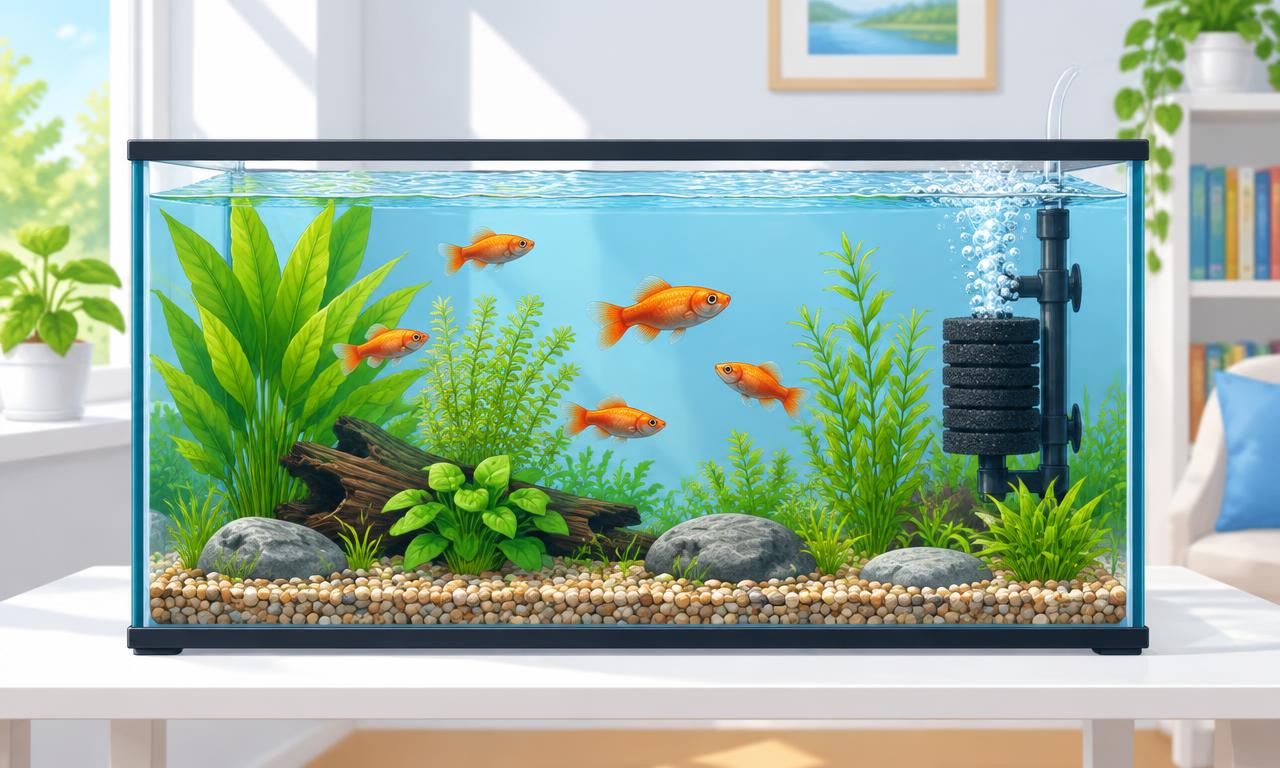
Understanding Aquarium Filtration
A tank filter is a device that helps keep the water in a fish tank clean and safe for fish to live in. It works by moving water through special materials that remove solid waste, trap unwanted particles, and provide a home for beneficial microorganisms that help break down harmful substances. For most home aquariums, a properly functioning filter is one of the most important pieces of equipment an owner can provide.
At first glance, a fish tank might appear to be a simple container of water. However, an aquarium is a small, enclosed environment in which waste can accumulate quickly. Every time a fish eats, its body processes the food and produces waste. Uneaten food, dead plant material, and other organic matter can also collect in the water. If these substances are not managed properly, the water can become dangerous for the fish, even when it looks perfectly clear.
A filter helps manage this problem by circulating the water and supporting the natural processes that keep an aquarium healthy. It does not make the water permanently clean, and it cannot replace regular maintenance. Instead, it works as part of a larger system that includes appropriate feeding, water testing, and partial water changes.
Why Do Fish Tanks Need Filters?
To understand why a filter is important, imagine living in a room where your waste and leftover food were never removed. Over time, the environment would become increasingly unpleasant and unhealthy. Fish face a similar problem when waste accumulates in their water.
In nature, fish live in environments such as rivers, lakes, ponds, and oceans. These environments contain complex communities of microorganisms that help break down waste. Water movement and the size of the surrounding environment also influence how substances are distributed and processed.
A home aquarium is much smaller than most natural aquatic habitats. Waste can therefore build up more rapidly, especially when several fish share a tank. Without proper filtration and maintenance, harmful substances may reach dangerous concentrations.
One of the most important substances to control is ammonia. Fish release ammonia as a waste product, and it can also form when leftover food and other organic material decompose. Ammonia is toxic to fish. Depending on its concentration and the water's pH and temperature, it can damage their gills and other tissues.
A properly established aquarium filter supports beneficial microorganisms that help convert ammonia into less immediately toxic substances. This process is essential for maintaining a healthy aquarium.
Filtration also helps remove visible debris from the water. Small pieces of uneaten food, fragments of plants, and other particles can make an aquarium look dirty. A filter can trap many of these materials before they settle throughout the tank.
However, clear water is not necessarily safe water. Harmful substances such as ammonia and nitrite can be present even when the aquarium looks sparkling clean. This is why filtration must be combined with water testing and regular maintenance.
How Does a Tank Filter Work?
Most aquarium filters operate by drawing water from the tank and passing it through one or more filtering materials. The filtered water then returns to the aquarium, allowing the process to continue.
Many filters use a small electric pump to move the water. Others use different mechanisms, such as air-powered systems, to create water movement.
Inside the filter, water passes through materials chosen for particular purposes. Some materials catch solid particles. Others provide surfaces where beneficial microorganisms can live. Certain specialized materials can also remove particular dissolved substances.
Aquarium filtration is commonly divided into three categories: mechanical filtration, biological filtration, and chemical filtration.
1. Mechanical Filtration: Removing Solid Waste
Mechanical filtration removes solid particles from aquarium water.
A filter may contain a sponge, foam block, filter pad, or other material with small spaces that catch particles as water passes through. These materials can collect fragments of plants, uneaten food, loose debris, and other suspended matter.
Think of mechanical filtration as a sieve that catches unwanted particles while allowing water to pass through.
As the material collects debris, it gradually becomes dirtier. If too much material accumulates, water may have difficulty passing through it, reducing the filter's flow.
For this reason, mechanical filter materials need occasional cleaning. The frequency depends on the aquarium, the filter, the amount of waste produced, and the manufacturer's instructions.
Mechanical filtration improves water clarity, but it does not remove every substance that can harm fish. Dissolved waste may pass through a mechanical filter, which is why biological filtration is also so important.
2. Biological Filtration: Using Beneficial Microorganisms
Biological filtration is the process of using beneficial microorganisms to help break down waste products in an aquarium.
These microorganisms include bacteria that live on surfaces inside the aquarium. They commonly grow on filter sponges, porous ceramic materials, gravel, decorations, and other suitable surfaces.
Some of these bacteria help convert ammonia into nitrite. Other microorganisms convert nitrite into nitrate.
This process is called the nitrogen cycle.
Ammonia is dangerous to fish, and nitrite is also toxic. Nitrate is generally less toxic than either of these substances, although it can still become harmful when it accumulates to high levels.
Biological filtration is especially important because it helps process waste that cannot simply be caught in a sponge or filter pad.
The beneficial microorganisms need suitable conditions to establish and survive. A brand-new aquarium may not yet have enough of these organisms to process the waste produced by its fish.
This is why a new aquarium needs to be properly cycled before fish are introduced. Cycling establishes the biological filtration system that allows waste to be processed more safely.
Biological filtration does not mean that waste disappears completely. Nitrate and other substances can still accumulate, so aquarium owners must continue testing the water and performing appropriate water changes.
3. Chemical Filtration: Removing Certain Dissolved Substances
Chemical filtration uses specialized materials to remove certain substances dissolved in aquarium water.
One familiar example is activated carbon. This material has a structure containing many tiny pores, giving it a large surface area that can attract and hold certain compounds. This process is known as adsorption.
Depending on the aquarium and the material used, chemical filtration can help remove certain organic compounds, odours, and discolouration.
Other specialized filter materials are designed for particular purposes, such as removing certain unwanted substances from the water.
Chemical filtration is not essential in every aquarium. Its usefulness depends on the fish, the water conditions, and the purpose of the material.
It is also important to remember that activated carbon does not solve every water-quality problem. It does not replace a functioning biological filter, and it cannot eliminate the need for water changes.
What Does a Tank Filter Look Like?
Aquarium filters come in several shapes and sizes. Some are small devices that hang on the back of a tank, while others sit inside the aquarium or operate in a separate container connected to the tank.
The most suitable type depends on the aquarium's size, the species being kept, the amount of waste produced, and the owner's maintenance preferences.
Internal Filters
An internal filter sits inside the aquarium, usually attached to the glass with suction cups or another mounting system.
Water enters the filter, passes through its filtering materials, and returns to the tank. Many internal filters use a small electric pump to move the water.
Because they sit inside the aquarium, internal filters do not usually require much additional plumbing. They are available in different sizes and designs, although their effectiveness depends on whether the particular model is appropriate for the aquarium.
Hang-on-Back Filters
A hang-on-back filter, often shortened to HOB filter, hangs over the back wall of an aquarium.
A pump draws water from the tank into the filter chamber. The water passes through the filter media and then flows back into the aquarium.
The returning water often creates movement at the surface, which can help gas exchange between the water and the surrounding air.
These filters are popular in many home aquariums because the main filter chamber is outside the tank, leaving more swimming space inside.
Sponge Filters
A sponge filter uses a porous sponge as its main filtering material.
In many designs, an air pump sends air through a tube inside the filter. As the air rises, it helps draw water through the sponge.
The sponge catches solid particles and provides a large surface area where beneficial microorganisms can grow.
Sponge filters are commonly used in aquariums that need gentle water movement. They can be useful for certain small fish, breeding tanks, and aquariums containing animals that might be disturbed by a strong current.
However, a sponge filter must still be appropriately sized and maintained for the aquarium in which it is used.
Canister Filters
A canister filter is a filtration system housed in a separate container, usually positioned outside the aquarium.
Water travels from the aquarium into the canister, passes through its filtering materials, and is pumped back into the tank.
Canister filters can hold different types of filter media and are available in designs intended for a range of aquarium sizes.
Some canister filters provide substantial filtration capacity, but their performance depends on the model, the media arrangement, and regular maintenance.
They can also involve more complicated setup and cleaning than simpler filters.
Which Filter Is Best?
There is no single filter that is best for every aquarium.
A filter must be suitable for the tank's water volume, the fish's needs, and the amount of waste produced. A system that works well for a lightly stocked aquarium may be inadequate for an aquarium containing larger fish that produce considerable waste.
The filter must also provide appropriate water movement. Some fish thrive in strong currents, while others prefer calmer water.
Before purchasing a filter, an aquarium owner should check the manufacturer's recommendations and consider the needs of the particular fish.
A filter should not be selected solely because it is inexpensive, small, or attractive. Its main job is to help maintain a healthy environment for the animals living in the aquarium.
What Is Filter Media?
Filter media are the materials inside an aquarium filter that carry out its filtering functions.
Different types of media have different jobs.
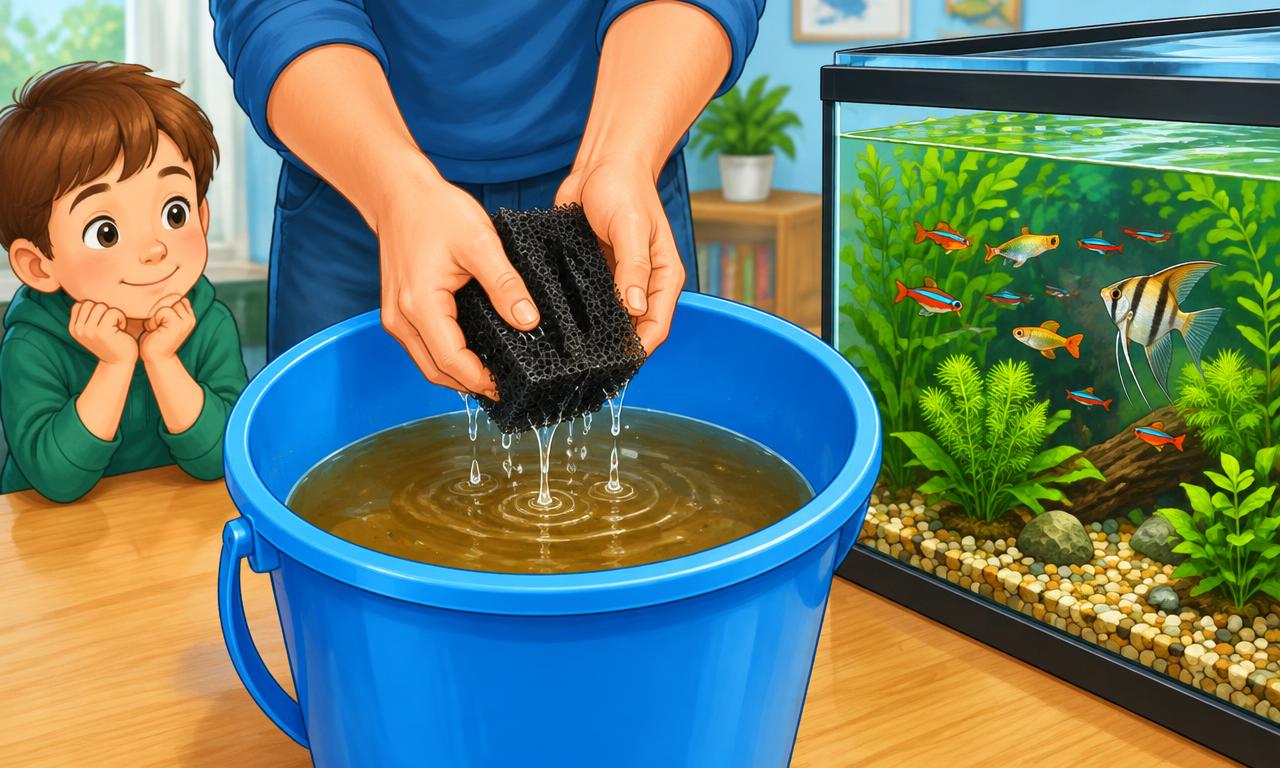
A sponge or foam pad is commonly used for mechanical filtration. It catches particles while allowing water to pass through.
Porous ceramic rings and other specialized biological media provide surfaces where beneficial microorganisms can establish themselves. These materials are designed to offer substantial surface area within a relatively small space.
Activated carbon is an example of chemical filter media. It can adsorb certain dissolved substances, although its effectiveness depends on the substance involved and the condition of the carbon.
Some filters use several kinds of media together. Water may first pass through a material that catches larger debris and then flow through media that support biological filtration.
The arrangement depends on the filter's design and the manufacturer's instructions.
Filter media should be maintained carefully. Mechanical media may need rinsing when debris accumulates, while some chemical media must be replaced after their useful capacity has been reached.
Biological media should not be replaced unnecessarily. A mature filter may contain a large population of beneficial microorganisms, and replacing all the biological media at once can disrupt the aquarium's nitrogen cycle.
If a filter needs new media, the owner should follow the manufacturer's guidance and avoid removing more established biological material than necessary.
How Do You Clean a Tank Filter?
A tank filter requires regular attention to keep it functioning properly.
As water passes through the filter, debris accumulates in its mechanical media. Over time, this material can restrict the flow of water. The filter may need cleaning if the water flow becomes noticeably weaker or if debris has accumulated heavily.
The exact cleaning procedure depends on the filter model.
Before cleaning, the owner should follow the manufacturer's safety instructions. Many electric filters need to be unplugged before they are opened or handled.
Mechanical media can often be rinsed gently in water removed from the aquarium during a water change. This helps remove trapped debris without unnecessarily exposing the media to untreated tap water.
Biological media should be handled carefully because it supports beneficial microorganisms. Cleaning it too aggressively or replacing it completely can damage the biological filtration system.
Not every type of filter media is reusable. Some products are designed to be replaced, and their instructions should be followed.
The filter housing, pump, and other components may also need occasional cleaning. Debris can collect around moving parts and interfere with their operation.
After maintenance, the owner should make sure the filter is correctly reassembled and working properly before leaving it running unattended.
A filter should not be left switched off for long periods without an appropriate reason. Without adequate water flow and oxygen, the beneficial microorganisms inside some filters can be harmed.
Most importantly, cleaning a filter is not the same as cleaning the entire aquarium. The filter helps process waste, but it cannot prevent every unwanted substance from accumulating in the water.
Does a Fish Tank Filter Mean You Never Have to Change the Water?
No. This is one of the most important things to understand about aquarium filtration.
A filter helps remove solid particles and supports the biological processing of fish waste. However, many dissolved substances remain in the aquarium even when the filter is working properly.
For example, the nitrogen cycle converts ammonia into nitrite and then nitrate. Although this process helps make the aquarium safer, nitrate can still accumulate.
Partial water changes help remove accumulated waste and maintain suitable water conditions.
The frequency and amount of water that should be changed depend on the aquarium's size, its inhabitants, the filtration system, feeding habits, and water-test results.
An aquarium owner should also monitor the water for ammonia and nitrite, especially when the aquarium is new or when fish show signs of stress.
A properly maintained filter and a sensible water-change routine work together. Neither replaces the other.

What Happens If a Tank Filter Stops Working?
A malfunctioning filter can become a serious problem, particularly in an aquarium that contains several fish or depends heavily on that filter for biological filtration and water circulation.
If the filter stops moving water, solid debris may no longer be collected effectively. Water movement may also decrease, potentially reducing gas exchange at the surface.
The beneficial microorganisms in a filter need suitable conditions to remain active. If water flow stops for an extended period, particularly in a filter with limited oxygen circulation, some of these microorganisms may be damaged.
If biological filtration is disrupted, ammonia or nitrite can rise as the aquarium's waste-processing capacity decreases.
When a filter stops working, the owner should investigate the cause promptly. Possible problems include a blocked intake, accumulated debris, a jammed impeller, a damaged pump, or a power interruption.
The filter should be restored to proper working order as soon as possible. Water quality should be checked, and appropriate corrective measures should be taken if ammonia or nitrite is present.
If a filter has been stopped for a long time, the owner should not assume that it is safe simply because it starts running again. The condition of the filter and the aquarium's water quality may need careful assessment.
Fish should be observed for signs of distress, including unusually rapid breathing, gasping at the surface, or abnormal swimming.
How Can You Tell Whether a Filter Is Working Properly?
A filter should move water according to its design, and its components should operate as described by the manufacturer.
An owner can look for several warning signs:
- Water is flowing much more slowly than usual.
- The pump makes unusual noises.
- The filter stops unexpectedly.
- Debris has accumulated heavily in the filter.
- The intake or other openings appear blocked.
- The filter leaks or shows signs of damage.
These signs do not always mean the filter has completely failed, but they indicate that it needs attention.
Water testing is also important. A filter can appear to be operating normally while the aquarium still has an ammonia or nitrite problem. The system may be new, overloaded, damaged internally, or unable to process waste quickly enough.
A filter's advertised flow rate is not, by itself, proof that the aquarium is healthy. Water quality depends on several factors, including the filter's design, the amount of biological media, the fish's waste production, and the maintenance routine.
The best way to assess an aquarium is to combine equipment checks with regular observation and appropriate water testing.
Why Is a Tank Filter Important?
A tank filter performs several jobs that help create a healthier environment for aquarium fish. It can catch suspended debris, circulate water, and provide surfaces where beneficial microorganisms process fish waste.
Its most important contribution is often biological filtration. By helping establish and maintain the microorganisms responsible for the nitrogen cycle, the filter supports a process that reduces the danger posed by ammonia and nitrite.
However, a filter is only one part of responsible fish care. Fish also need suitable space, appropriate food, the correct temperature, adequate oxygen, compatible tankmates, and water conditions suited to their species.
An aquarium owner must maintain the filter, test the water, and perform appropriate water changes. Simply installing a filter does not guarantee that the aquarium will remain healthy.
The key fact to remember is this: a tank filter helps keep aquarium water healthy, but it does not make the aquarium maintenance-free. Its effectiveness depends on choosing the right equipment, establishing biological filtration, maintaining the filter properly, and caring for the aquarium as a whole.